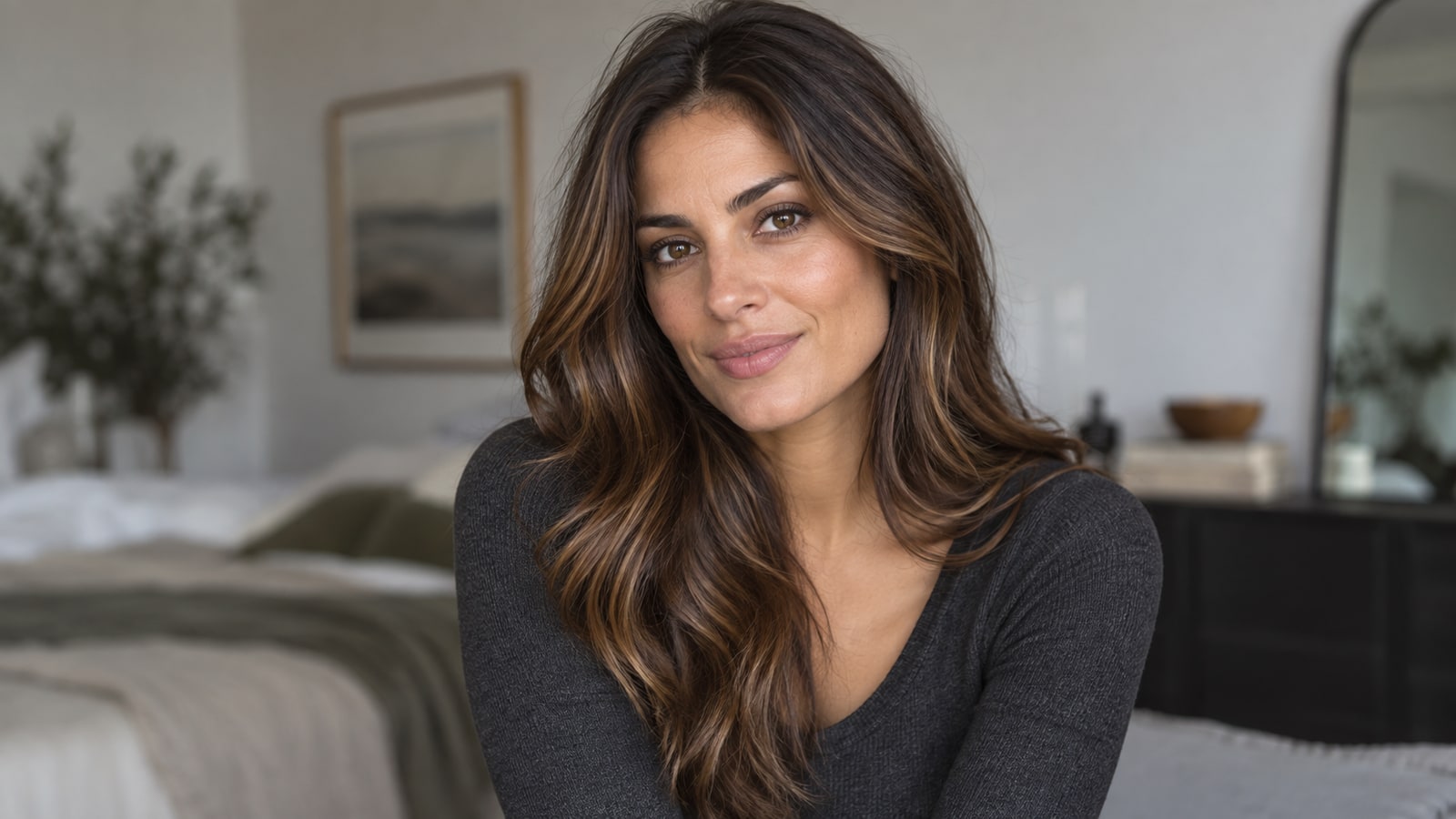
The unique olive skin dilemma
“Olive” usually describes a greenish or gray-green cast in the skin, but it does not tell you how light or deep your skin is, or prove that your undertone is cool. Some people read neutral or cool-neutral; others see more warmth. Lighting, makeup, and surface redness can change that impression. If the usual warm-peach versus cool-pink charts leave you out, compare hair colors directly beside your own face instead of accepting a fixed category.
Two extremes are useful comparison points, not forbidden choices. Very flat gray-ash hair may make an olive cast more noticeable; fiery copper can set up a strong complementary contrast with green. You may enjoy either effect. Test a richer neutral brown and a controlled warm brown at the same depth first, so you can tell whether depth or reflect is creating the difference.
A fair test: place two hair swatches or previews beside the same unfiltered photo in neutral daylight. Keep the depth similar, then compare your eyes, brows, skin, and hair as one composition. A virtual preview helps narrow directions; it cannot predict dye chemistry or confirm undertone.
Pale olive versus deep olive coloring
Pale olive means a lighter skin depth with a possible olive cast. Rich mocha, chestnut, and creamy mushroom brunette are useful first comparisons because they keep visible separation from the skin while changing warmth one step at a time. A mushroom brown can be neutral or cool-leaning without becoming an opaque gray. If a very dark brunette feels more graphic than you want, test level 5 before level 3.
Deep or golden olive can support equally varied contrast. Espresso and dark cocoa keep depth; honey-caramel balayage introduces light in selected areas; mahogany adds a red-violet note. Those are choices about placement and effect, not a rule that deeper skin needs warmer hair. Compare the highlights against your natural or current base before deciding how much lift is worthwhile.
The best hair-color directions to compare for olive skin
Rich mocha and dark chocolate: roughly levels 4–5
A medium-dark mocha gives structure without the sharp edge of blue-black. Chocolate can carry a modest warm reflect, while neutral mocha stays quieter. These shade names are descriptive: professional level numbers denote depth, and the exact code varies by brand. Wella Professionals’ shade guide explains the depth and tone numbering behind that conversation. Ask your colorist to compare the swatches beside your current hair rather than ordering by a name alone.
Caramel and toffee balayage
Caramel adds gold-brown light without turning the entire head blonde. Fine face-framing pieces can create a noticeable change while leaving more of a dark base intact. Toffee reads deeper and less yellow than bright honey. The placement and contrast matter as much as the label: a few low-contrast pieces are subtler than broad, light ribbons and may allow a gentler grow-out.
Dirty blonde and beige blonde
Olive skin can absolutely be paired with blonde hair. Dirty blonde keeps a darker root or lowlight for depth; beige blonde sits between clearly golden and clearly ash. Compare a warm honey-beige with a neutral beige at the same lightness. If your starting hair is dark or previously colored, reaching a light blonde may take more lift and maintenance than the preview suggests. Your colorist needs your color history and a strand test to judge what is achievable.
Shades that may feel harder to balance
Platinum ash can be striking, but it changes both depth and temperature at once. If a pale gray finish makes the whole composition feel low in contrast, compare a rooted pearl blonde or a deeper beige instead. The decision is about the effect you want, not a claim that olive skin looks unhealthy.
Vibrant yellow-gold can appear separate from a subtle green-gray cast, especially under warm indoor light. Test it against softer honey or toffee before rejecting warmth altogether. Conversely, if bright gold is your deliberate statement, keep it. A photograph alone cannot tell you which version you will prefer in daylight or how a toner will fade on your hair.
Frequently asked questions
Can olive skin have blonde hair?
Yes. Warm honey and neutral beige are practical starting comparisons, with a deeper root if you want to retain contrast. Icy ash is also an option when you want a sharper statement and accept the lift and upkeep it may require. The right plan depends on your current base, prior color, and maintenance tolerance.
Does black hair look good on olive skin?
Black can make a deliberate high-contrast frame. Compare natural-looking off-black, deep espresso, and blue-black in the same light: blue-black tends to read cooler and more graphic, while espresso may feel less absolute. Choose the effect you want rather than using “olive” as a pass/fail test.