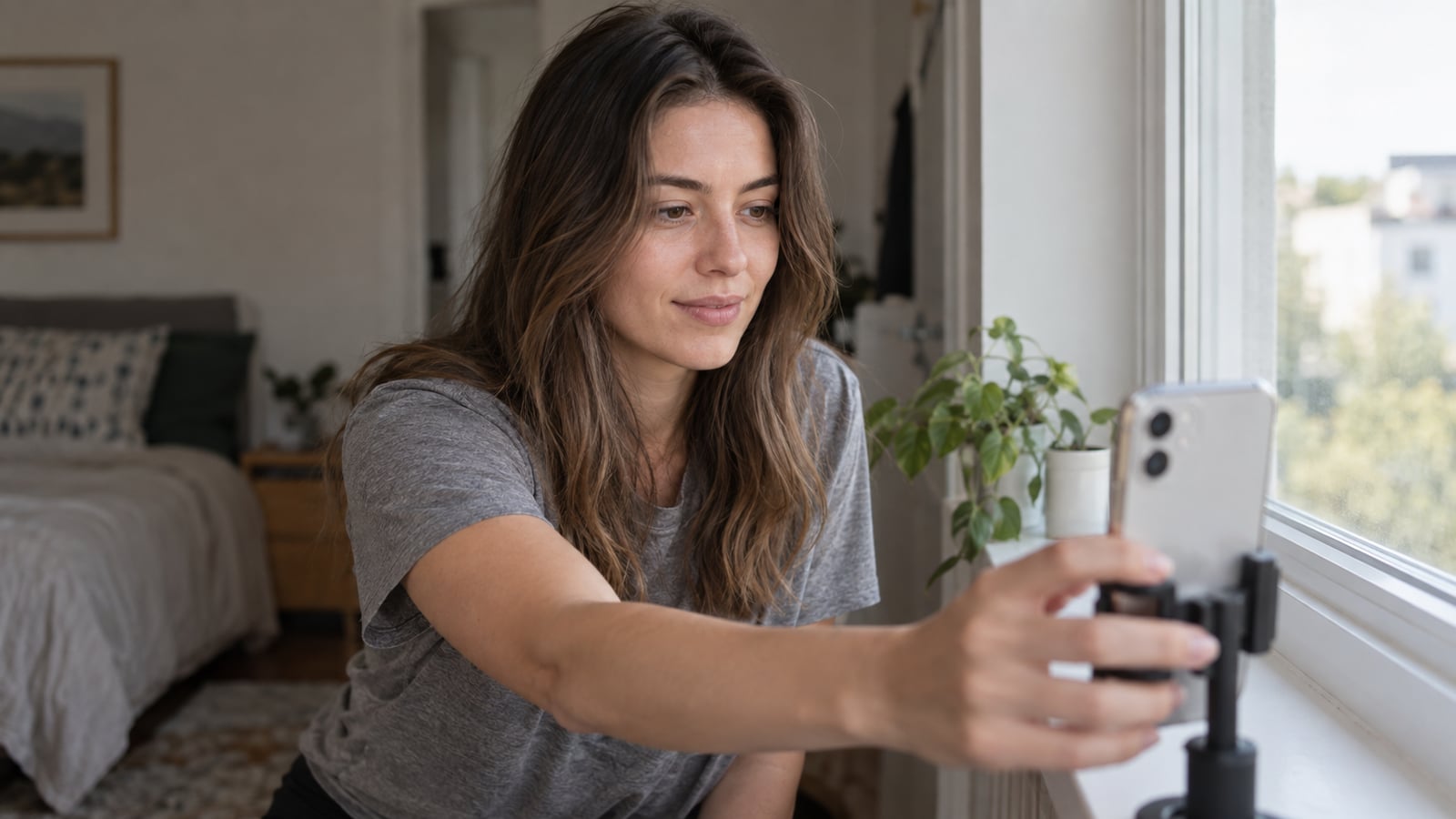
Why the source photo matters
A phone adjusts exposure and white balance automatically. Under a yellow lamp, brown or blonde hair may look warmer than it does in daylight; a virtual shade placed over that image inherits the misleading color context. The goal is consistency, not laboratory accuracy. Take one clear photo and use that same image when comparing every preview.
No selfie can reliably determine skin undertone, natural hair level, porosity, dye history, or a salon outcome. If you need to judge those things, use physical references and ask a qualified colorist. The four-step color decision guide explains what to compare after you have a usable image.
Three lighting rules for a useful photo
1. Face soft window daylight
Stand or sit facing a broad window with the sun out of direct view. North-facing or east-facing light can work well when it is diffuse, but direction matters less than an even light across your face and hair. Avoid a bright stripe of sun on one side. “Around 5000K” describes a daylight-like reference; your window light and phone are not calibrated to that number.
2. Turn off the room lights
Overhead bulbs and warm lamps can mix yellow or orange light with cooler window light. That mix makes one part of your hair appear warmer than another. Switch them off, then take a test photo. If the room is too dim, move closer to the window instead of adding a warm lamp.
3. Skip direct flash
Flash can create glare on hair and scalp and hard shadows around the hairline. Those bright spots make depth and edges harder to compare. If the window is too bright behind you, turn toward it or move to a spot with even light rather than using flash to fill the scene.
Phone settings that can change what you see
Turn off beauty filters and any portrait blur that erases flyaways or softens the hairline. If your camera offers strong HDR or smoothing controls, use the least processed setting available. Avoid a warm camera filter, and do not edit the color between comparisons.
When reviewing the photo or preview, turn off display color shifts such as True Tone and Night Shift on supported Apple devices; Apple explains those display settings. Other devices may have a similar warm or comfort mode. A display setting changes what you see on screen, not the actual color of your hair. Compare on the same device with the same screen settings.
Frame your hair so the comparison is useful
Set the phone roughly at eye level, keep your head upright, and leave space around the full hair outline. Wear your hair down if that reflects how you normally style it, part it as usual, and show the ends. Keep loose strands visible rather than smoothing everything into a new style for the photo. An unfamiliar part or hairstyle can make the color change harder to judge.
Choose a plain background and neutral clothing, such as gray, white, or black, that does not throw strong color onto your face or neck. Avoid a vivid shirt or colored wall close to your hair. Take one front view; a side or back view can be useful if you are comparing placement, but keep the same angle for each shade.
Check that the image is sharp, evenly lit, and unfiltered before you start. Then compare two or three color directions on that same image. A digital preview helps narrow a conversation; a strand test and consultation are still needed for a real color service.
Frequently Asked Questions
Should I wear makeup in my try-on photo?
You do not have to remove makeup to compare hair colors. Use the look you normally wear if that is the context you care about. Heavy color-correcting makeup or filters can change the visual comparison, so keep your makeup and lighting consistent across the options. Neither a bare-face photo nor makeup can certify undertone.
Can I take the photo outdoors?
Yes, if you can find open shade or an evenly overcast area. Direct sun often creates strong highlights and shadows that make one side of the hair read differently. Avoid colored reflections from nearby walls or clothing. Use the same outdoor image for each preview, and check the result again in neutral light before choosing a salon reference.