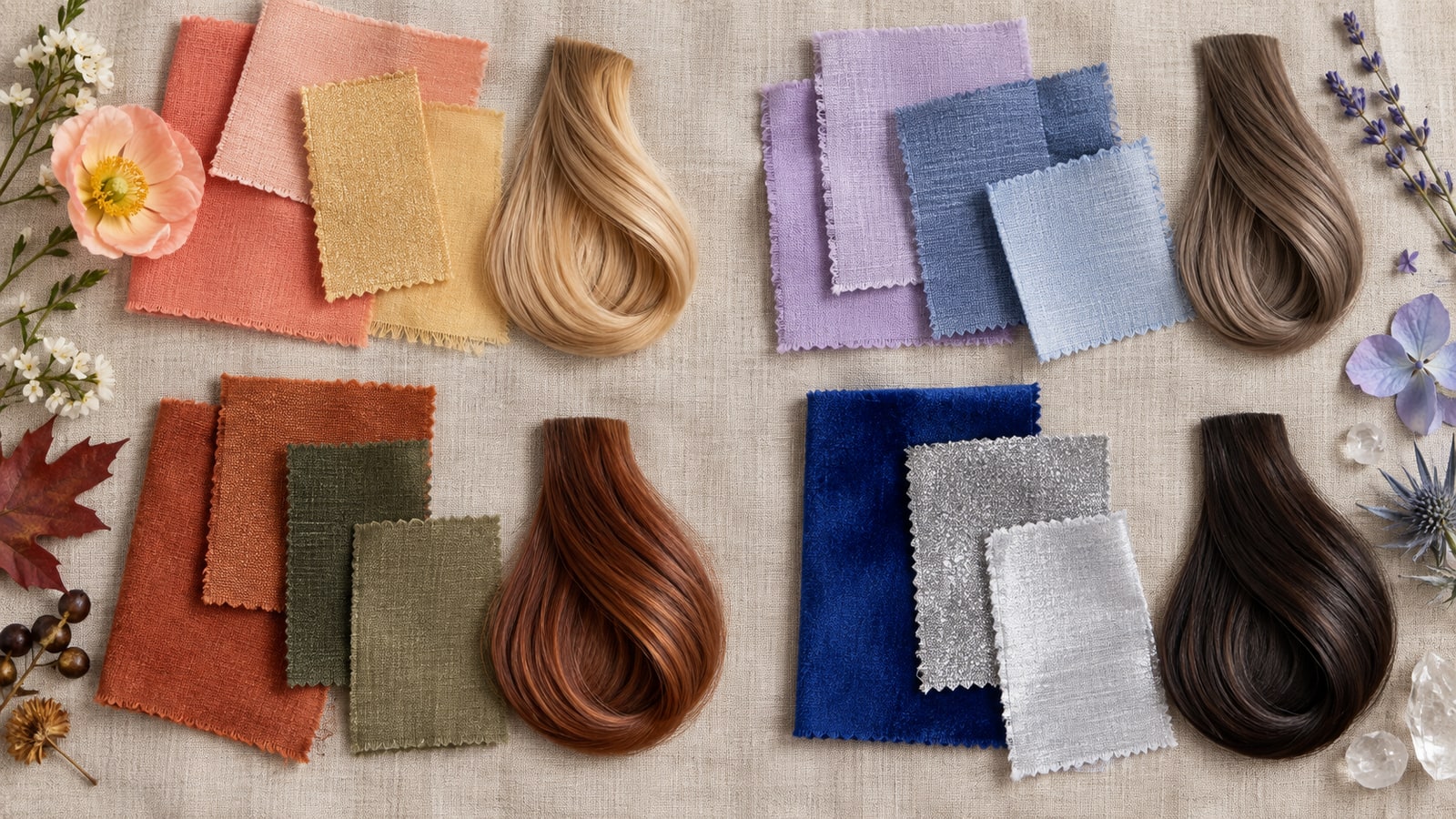
The three dimensions of seasonal hair color
Seasonal color analysis sorts color relationships by temperature, value, and chroma. Temperature asks whether a shade reads warmer or cooler: compare a golden brown with an ash brown at the same depth. Value is how light or dark it is: a level-7 blonde and a level-4 brunette can share a temperature but create very different contrast. Chroma is clarity or saturation: smoky taupe is muted, while a clear copper or blue-black reflect is more vivid.
These dimensions help you describe a goal without claiming a photo can measure your undertone or assign a season. Hair also has a starting base and color history; those affect the route to a target shade. If you are new to depth and reflect, our hair-color analysis guide separates visible clues from information you must supply. Wella Professionals’ depth and tone chart is a useful reference for how colorists describe the two separately.
The four big seasonal quadrants
Spring is commonly described as warm and clear. Golden blonde, strawberry blonde, and warm copper are illustrative directions. Light Spring emphasizes lightness, Warm Spring emphasizes warmth, and Bright Spring emphasizes clarity. A deeper starting base may make bright copper a more realistic first experiment than a pale blonde.
Summer is generally cool and softened. Mushroom brown, smoky taupe, ash blonde, and restrained pearl fit that idea at different depths. A muted result need not look gray; keeping some natural dimension often matters more than removing every warm strand. See our Soft Summer and Cool Summer guides for the difference between gentle and crisper cool effects.
Autumn is warm and more muted than Spring. Auburn, chestnut, chocolate caramel, and softened copper illustrate the family. Pumpkin-spice language can be a shopping shorthand, but request a reference with visible depth and reflect: “spice” alone is not a salon formula.
Winter is usually cool and clearer. Deep espresso, soft or blue-black, dark berry, and icy platinum cover very different levels of maintenance. A light platinum interpretation is possible, but reaching it from dark or previously colored hair can require substantial lift. The Cool Winter guide compares those options in detail.
The 12-season hair-color master matrix
Use the directions as first swatches to test, not as exclusive matches. A season name cannot tell a colorist your natural level, porosity, color history, gray coverage needs, or how a specific dye will fade.
| Season | Main priority | Hair directions to compare |
|---|---|---|
| Light Spring | Light, warm-clear | Light golden blonde, warm beige, gentle strawberry blonde |
| Warm Spring | Warmth first, clear | Honey blonde, golden brown, clear copper |
| Bright Spring | Clear, warm-leaning | Bright golden blonde, vivid copper, clear brunette |
| Light Summer | Light, cool-soft | Cool beige blonde, pearl blonde, light ash brown |
| Cool Summer | Coolness first, softened | Cool dark blonde, ash brown, cool cocoa |
| Soft Summer | Muted, cool-neutral | Mushroom brown, smoky taupe, soft ash blonde |
| Soft Autumn | Muted, warm-neutral | Soft chestnut, caramel brown, muted auburn |
| Warm Autumn | Warmth first, earthy | Copper, cinnamon brunette, warm chestnut |
| Deep Autumn | Deep, warm-neutral | Dark chocolate, deep auburn, espresso with warmth |
| Deep Winter | Deep, cool-neutral | Deep espresso, soft black, dark burgundy |
| Cool Winter | Coolness first, clear | Cool espresso, blue-black, icy platinum |
| Bright Winter | Clear, cool-leaning | Glossy black, vivid cool berry, sharply toned platinum |
Begin with the row closest to the effect you want, then compare one neighboring row. If Soft Summer feels too gray, for example, test a clearer Cool Summer brown at the same depth. If Deep Autumn feels too warm, compare a neutral Deep Winter espresso. This isolates the color dimension you are actually responding to.
Color season as a working hypothesis, not a dogma
Seasonal systems vary, and a photograph can shift with white balance, daylight, surrounding fabric, makeup, and editing. Your current hair can also change the contrast visible around your face without establishing a new underlying season. Use draping in consistent light and your own preference to evaluate a palette; do not treat a selfie or a quiz as a definitive classification.
If you love an “off-season” shade, plan how to carry it. A cooler lip or a warmer scarf can connect a new hair reflect to your wardrobe; a root shadow can preserve familiar depth; a small face-framing accent can test warmth before a full-head change. These are styling options, not corrections to your appearance. Compare the whole look before committing to irreversible lift or dark deposit.
Explore the season deep dives
For the softer side of Summer, read Soft Summer hair colors. For a crisper cool comparison, read Cool Summer hair colors. For dark, clear contrast, read Cool Winter hair colors. Our olive skin guide explains why skin depth and a possible olive cast deserve a separate comparison rather than an automatic season assignment.
The other subtype rows in the matrix are starting points here; dedicated guides can expand their shade and maintenance decisions later. For now, choose two adjacent directions and take those visual references to a qualified colorist.
Frequently asked questions
Can my color season change if I dye my hair?
Dye changes the visible hair color and often the contrast of the whole look. It does not prove that your skin undertone or iris pigment changed. Some seasonal frameworks would keep your original category; others may describe the new overall effect differently. Compare palettes in consistent light and use the label that helps you make choices.
What is the most common season?
There is no reliable population-wide ranking for the 12 styling categories. Claims that Soft Summer or Soft Autumn is “most common” depend on the framework and the people being assessed. Your own comparison is more useful than a popularity claim.