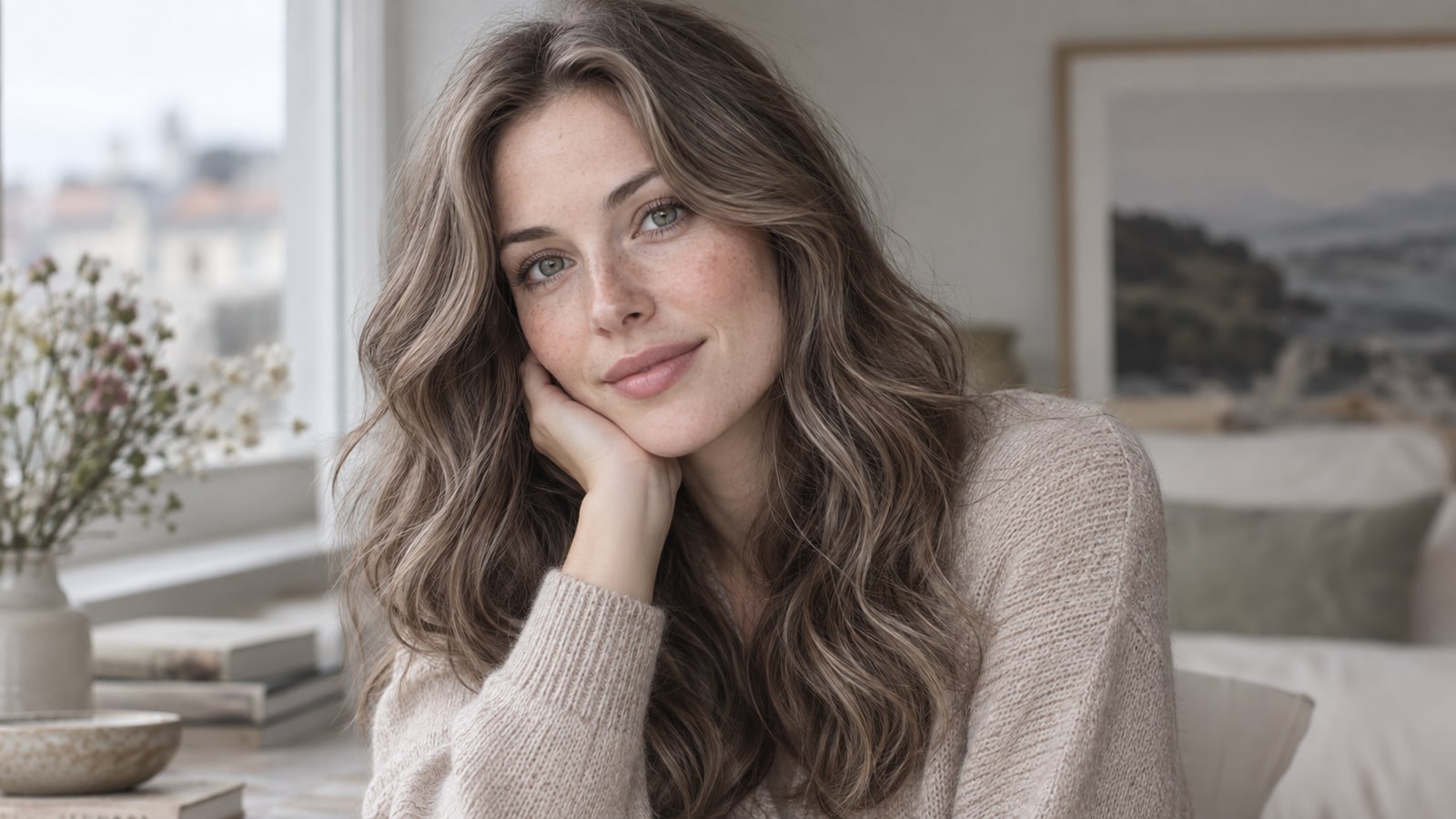
The Anatomy of Soft Summer Coloring
Soft Summer is the muted, cool-neutral side of the Summer color family. Its defining relationship is gentle contrast and slightly grayed color, rather than an absolute rule about eye color, skin depth, or natural hair. Gray, green, or hazel eyes may appear in examples, but none establishes a season on its own. The same is true of a photograph: light and camera processing can shift both skin and hair color.
To use the palette, hold depth steady while changing tone. Compare a neutral medium brown with a mushroom brown in the same daylight, then decide whether the quieter taupe reflect supports the look you want. If you prefer a cleaner, more distinctly cool effect, the Cool Summer guide is a useful second comparison. Our seasonal hair-color overview places both directions in context.
The Core Palette: Muted Brunettes and Ash Brondes
Mushroom brown
Mushroom brown combines brown depth with a cool taupe or ash-beige reflect. Around professional levels 5–6, it can read as a soft brunette rather than a silver or gray finish. Ask to see a version that retains natural dimension: a solid, heavily ashed color may look flatter than the reference. The final tone depends on the existing pigment and any previous color.
Smoky ash bronde
Bronde sits between brunette and blonde. A smoky ash bronde uses a shadowed root and narrow lighter pieces that stay near the base in value. This makes it a practical middle ground when you want more light around the hair without broad blond panels. If your current hair is dark or previously colored, the lift required may change the cost and upkeep considerably.
Frosted walnut and cool cocoa
Frosted walnut keeps a medium-brown foundation with fine, cooler ribbons; cool cocoa preserves more depth and shine. Both offer a deeper option without defaulting to jet black. Compare them beside a core Soft Summer palette at the same light level, paying attention to whether you prefer the slightly brighter walnut or the quieter cocoa.
What Soft Summers Must Avoid
Jet black can create a much harder border against a muted, low-contrast palette. Bright golden honey blonde and vivid copper introduce stronger warmth and saturation. These choices are not forbidden; they simply shift the result from blended to intentional contrast. Try soft black beside cool cocoa, or muted beige blonde beside golden honey, before deciding which effect you prefer.
A virtual try-on can show the broad contrast shift, but it cannot show how lightening exposes warmth or how a dye will take on your hair. For a major change, bring references in neutral light and ask a colorist to assess your current level, previous color, and strand-test result. Wella Professionals’ lightening guide explains why exposed pigment matters when a cool finish is the target.
Low-Contrast Dimensional Techniques
Micro-babylights are very fine lightened sections. Placed close together and only modestly lighter than the base, they create movement without the striped edge of broad foils. A root smudge or shadow blends the transition near the scalp, making new growth less abrupt. The dimensional techniques section explains where babylights, lowlights, and a root shadow make different visual changes.
A demi-permanent cool gloss can refresh the reflect after lightening, but it is not a substitute for the right lift or a universal formula. Shade suffixes such as .1 and .2 vary by brand and product line. Describe the look in words—“muted taupe, not silver; fine highlights, not broad stripes”—and let a qualified colorist translate it into a formula. For grow-out planning, see the maintenance guide.
Soft Summer Blonde vs. Soft Summer Brunette
| Consideration | Ash blonde or bronde | Cool taupe brunette |
|---|---|---|
| Maintenance | Cool tone may need periodic glossing as warmth reappears. | Tone can fade too, but a depth close to your base may make roots less visible. |
| Salon frequency | Fine highlights can allow a softer grow-out; timing depends on placement and desired brightness. | A close-to-base gloss may need tone refreshes, while a large dark-to-light reversal is a separate commitment. |
| Condition and lift | Lightening changes the hair and needs an assessment of past color and condition. | Staying near the current depth usually avoids major lift, though any color service needs care. |
| Visual impact | Adds lightness while retaining a muted effect if pieces remain narrow. | Keeps a softer, deeper outline with lower contrast. |
If your priority is a brighter look, compare bronde with a shadowed root before choosing an all-over blonde. If you want the simplest starting point, test a taupe brunette close to your existing depth. The answer changes with your base, budget, and tolerance for refresh appointments.
Frequently asked questions
Can a Soft Summer have naturally dark brown hair?
Yes. Seasonal labels describe a relationship among colors, not a fixed natural level. Dark brown can still look relatively soft and cool; compare its contrast with your features and wardrobe rather than using hair depth alone to assign a season.
What box dye matches Soft Summer?
Names such as “cool ash light brown” or “mushroom brown” can help you find a visual reference, but packaging names and codes vary. A box cannot account for previous dye or uneven porosity. For a significant change, a colorist can assess your hair and consider a demi-permanent gloss; if you color at home, follow the product directions and the FDA hair-dye safety guidance, including an allergy alert test.